Enhance your core strength with these 7 essential mat pilates exercises designed to target and tone your abdominal muscles effectively.
From the dynamic movements of the Hundred to the challenging stability of the Teaser, this curated selection of exercises offers a comprehensive workout for building a strong and resilient core.
Incorporate these exercises into your fitness routine to improve posture, balance, and overall body strength.
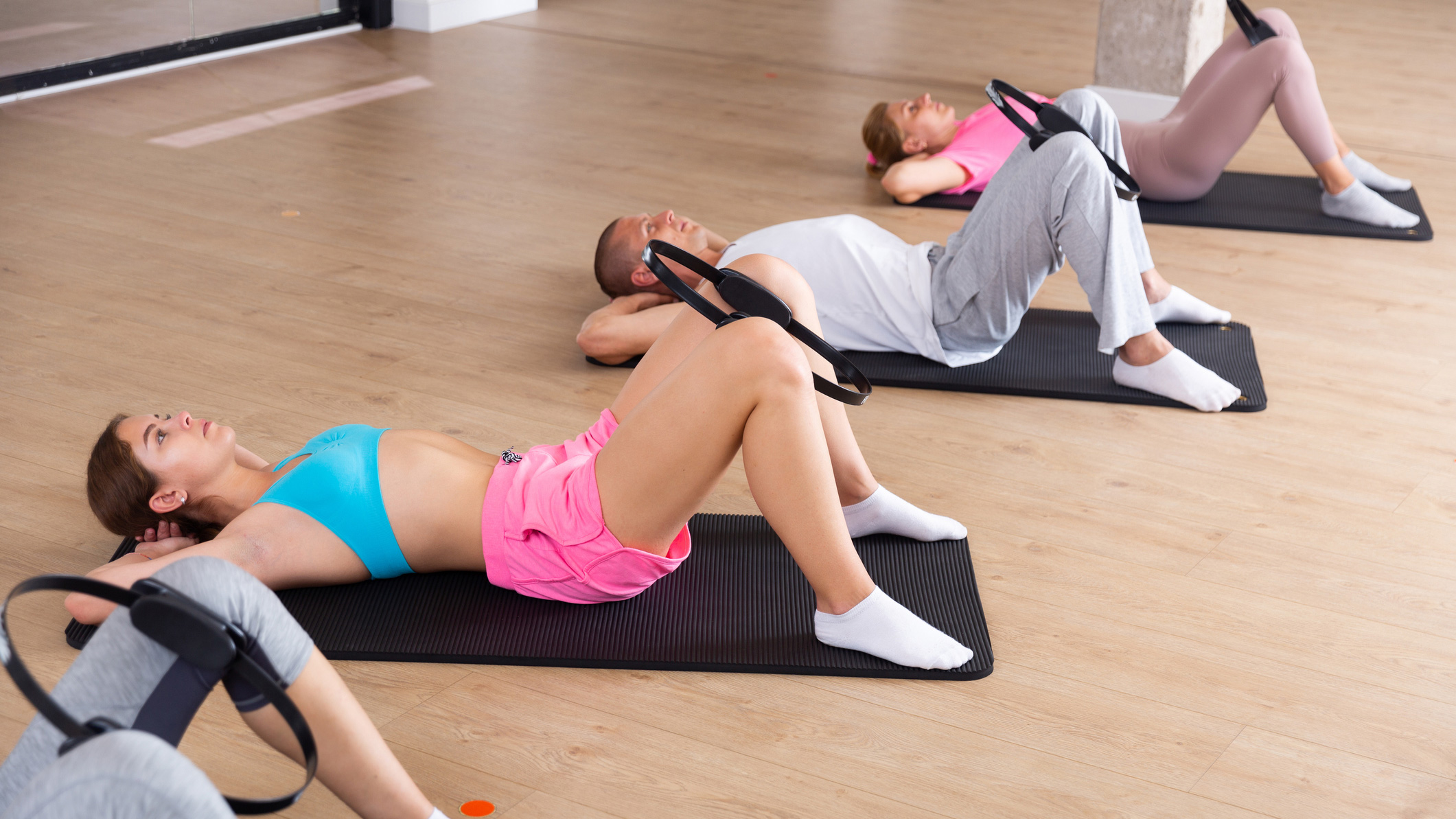
Hundred
How can the ‘Hundred’ exercise in mat Pilates effectively engage and strengthen the core muscles?
The ‘Hundred’ is a fundamental exercise in mat Pilates that targets the core muscles, specifically the transverse abdominis, rectus abdominis, and obliques. To perform the ‘Hundred’, lie on your back with your legs in a tabletop position and engage your core muscles to lift your head, neck, and shoulders off the mat. Extend your arms by your sides, slightly lifted off the mat https://la-pilatesstudio.com/, and begin to pump them up and down in a controlled motion while maintaining a strong core engagement.
The key to the effectiveness of the ‘Hundred’ exercise lies in the continuous contraction of the core muscles throughout the movement. By keeping the core activated to stabilize the body and support the movement of the arms, the ‘Hundred’ not only strengthens the abdominal muscles but also improves core stability and endurance. This exercise helps to develop a strong and stable core, which is essential for maintaining proper posture, preventing injuries, and enhancing overall strength and performance in various physical activities.
Roll-Up
The Roll-Up in Pilates is a foundational exercise that requires engaging the core muscles throughout the movement.
Maintaining proper alignment during the Roll-Up is crucial to prevent strain on the back and ensure maximum benefit for the core muscles.
Focusing on core engagement and alignment will help you execute the Roll-Up with control and precision.
Engage Core for Roll-Up
To effectively perform the Roll-Up exercise in Mat Pilates, engage the core by initiating movement from the lower abdomen up towards the chest. This engagement is crucial for executing the Roll-Up with proper form and maximizing its benefits for core strength.
As you lie on your back with legs extended and arms reaching overhead, focus on drawing your navel towards your spine to activate the deep core muscles. Throughout the movement of rolling up to a seated position and then articulating back down to the mat, keep the core muscles engaged to control the descent.
Proper Alignment During Roll-Up
Initiating the roll-up movement with proper alignment is essential for maximizing the benefits of the exercise and maintaining core stability in Mat Pilates. To ensure correct alignment during the roll-up, start by lying on your back with legs extended and arms reaching overhead. Engage your deep abdominal muscles, keeping the pelvis in a neutral position.
As you begin the movement, exhale and articulate through the spine sequentially, peeling each vertebra off the mat. Maintain a slight chin tuck to support the neck and avoid strain. Throughout the roll-up, focus on lengthening the spine and reaching through the fingertips.
Proper alignment not only enhances the effectiveness of the exercise but also helps prevent injuries and promotes overall body awareness.
Single Leg Stretch
When performing the Single Leg Stretch in Pilates, focusing on proper form is crucial for maximizing the exercise’s benefits.
Engaging the core muscles effectively and maintaining alignment throughout the movement are key points to pay attention to.
Coordinating your breathing with each leg movement can enhance the overall effectiveness of the exercise.

The correct alignment of the body is crucial when executing the Single Leg Stretch in Pilates. To maintain proper form during this exercise, start by lying on your back with your head and shoulders lifted off the mat, engaging your core muscles.
As you bring one knee towards your chest, ensure your other leg is extended at a 45-degree angle, keeping your lower back pressed into the mat. Switch legs smoothly, focusing on controlled movements and breathing rhythmically.
Avoid overarching your back or straining your neck by keeping your gaze towards your belly button. Remember to stabilize your pelvis throughout the exercise to maximize the engagement of your core muscles and prevent any unnecessary tension in the body.
Core Engagement Techniques
To further enhance the effectiveness of the Single Leg Stretch in Pilates, engage your core by focusing on controlled movements and maintaining proper alignment as you switch legs. Begin by lying on your back with your knees drawn towards your chest.
As you extend one leg out at a time, keep your lower back pressed into the mat by contracting your abdominal muscles. Ensure that your pelvis remains stable throughout the exercise to prevent overarching the lower back.
Breathing Coordination Guidance
For optimal performance during the Single Leg Stretch exercise in Pilates, focus on coordinating your breathing with each leg movement.
As you extend one leg out while keeping the other bent towards your chest, inhale deeply through your nose. Then, as you switch legs, exhale fully through your mouth, engaging your core muscles to stabilize your body.
The synchronized breathing helps to enhance the effectiveness of the exercise by promoting proper oxygen flow to your muscles and assisting in maintaining control and balance throughout the movement.
Double Leg Stretch
Perform the Double Leg Stretch exercise to engage and strengthen your core muscles effectively during a Mat Pilates session. This exercise targets the rectus abdominis, obliques, and transverse abdominis, helping to improve core stability and control.
To execute the Double Leg Stretch, lie on your back with your legs in a tabletop position and your arms extended overhead. As you inhale, extend your legs forward while reaching your arms back overhead. Exhale as you circle your arms around and hug your knees back into your chest, returning to the starting position.
Ensure that your lower back stays pressed into the mat throughout the movement to prevent overarching or straining the lumbar spine. Focus on maintaining a stable pelvis and engaging your deep core muscles to control the movement.
Aim to perform the Double Leg Stretch with control and precision, emphasizing the connection between your breath and movement. Adding this exercise to your Mat Pilates routine can help you develop a stronger and more resilient core.
Criss-Cross
Building on the engagement of core muscles achieved in the Double Leg Stretch exercise, the Criss-Cross exercise further challenges and strengthens the core during Mat Pilates sessions. The Criss-Cross, also known as the Bicycle exercise, targets the obliques, rectus abdominis, and transverse abdominis.
To perform this exercise, start by lying on your back with your hands interlaced behind your head, elbows wide, and legs lifted in a tabletop position. Inhale to prepare, then exhale as you twist your torso, bringing your right elbow towards your left knee while extending your right leg straight out. Inhale as you return to the center, then exhale as you twist to the other side, bringing your left elbow towards your right knee while extending your left leg.
This exercise involves a twisting motion that helps improve spinal mobility and works the entire core, promoting stability and strength. Aim for controlled movements and focus on engaging the core throughout the exercise for maximum benefit.
Plank
Continuing with the core-strengthening focus established in the previous exercise, an effective way to engage multiple muscle groups is through the Plank position in Mat Pilates sessions. The Plank is a fundamental exercise that targets the entire core, including the abdominals, obliques, lower back, and stabilizing muscles.
To perform a Plank correctly, one should start in a push-up position with the hands directly under the shoulders and the body forming a straight line from head to heels. Engaging the core muscles, hold this position for a determined amount of time, typically starting with 20-30 seconds and gradually increasing as strength improves.
Planks are beneficial for improving core stability, posture, and overall strength. By holding the Plank position, participants also engage muscles in the shoulders, arms, and legs, making it a full-body workout. Variations such as side planks or plank leg lifts can be incorporated to add diversity and challenge to the exercise.
Incorporating Planks into a Mat Pilates routine can significantly contribute to developing a strong and stable core, essential for various daily activities and sports performance.
Teaser
Executing the Teaser exercise in Mat Pilates sessions engages multiple core muscles simultaneously. The Teaser is a challenging Pilates move that focuses on strengthening the entire core, including the abdominals, obliques, and lower back.
To perform the Teaser, start by lying on your back with legs extended and arms reaching overhead. Inhale to prepare, then exhale as you lift your head, neck, and shoulders off the mat, simultaneously raising your legs to a 45-degree angle. Balance on your sit bones while forming a V shape with your body. Hold this position briefly before lowering back down with control.
The Teaser exercise requires not only core strength but also balance, control, and flexibility. By incorporating the Teaser into your Mat Pilates routine, you can enhance your core stability, improve posture, and develop a stronger mind-body connection.
Remember to engage your core muscles throughout the movement and focus on controlled, precise motions to reap the full benefits of this challenging exercise.
Conclusion
In conclusion, these 7 mat pilates exercises are effective for strengthening the core muscles. Incorporating these exercises into your workout routine can help improve overall stability, posture, and strength.
Consistent practice of these exercises can lead to a stronger core and better body alignment. Remember to focus on proper form and breathing techniques while performing these exercises to maximize their benefits.